
Whether delayed in an airport, stuck in a broken vehicle, or engulfed in a serious emergency situation, a mobile phone is an invaluable but battery-dependent part of modern life. But what if your battery is going dead and you don’t have access to electrical power? A battery-bank is the solution to recharge your phone and other small electronic devices.
Most battery-banks are simple to use and relatively inexpensive to purchase. Unfortunately, most of those sold in stores aren’t up to the task, including those that claim to have the vital specifications. To help, the 36Ready team leveraged our experience to identify key selection criteria, and also provide a list of top-rated battery-banks that promise to bail you out of dead-battery jail.
What is a Battery-Bank?
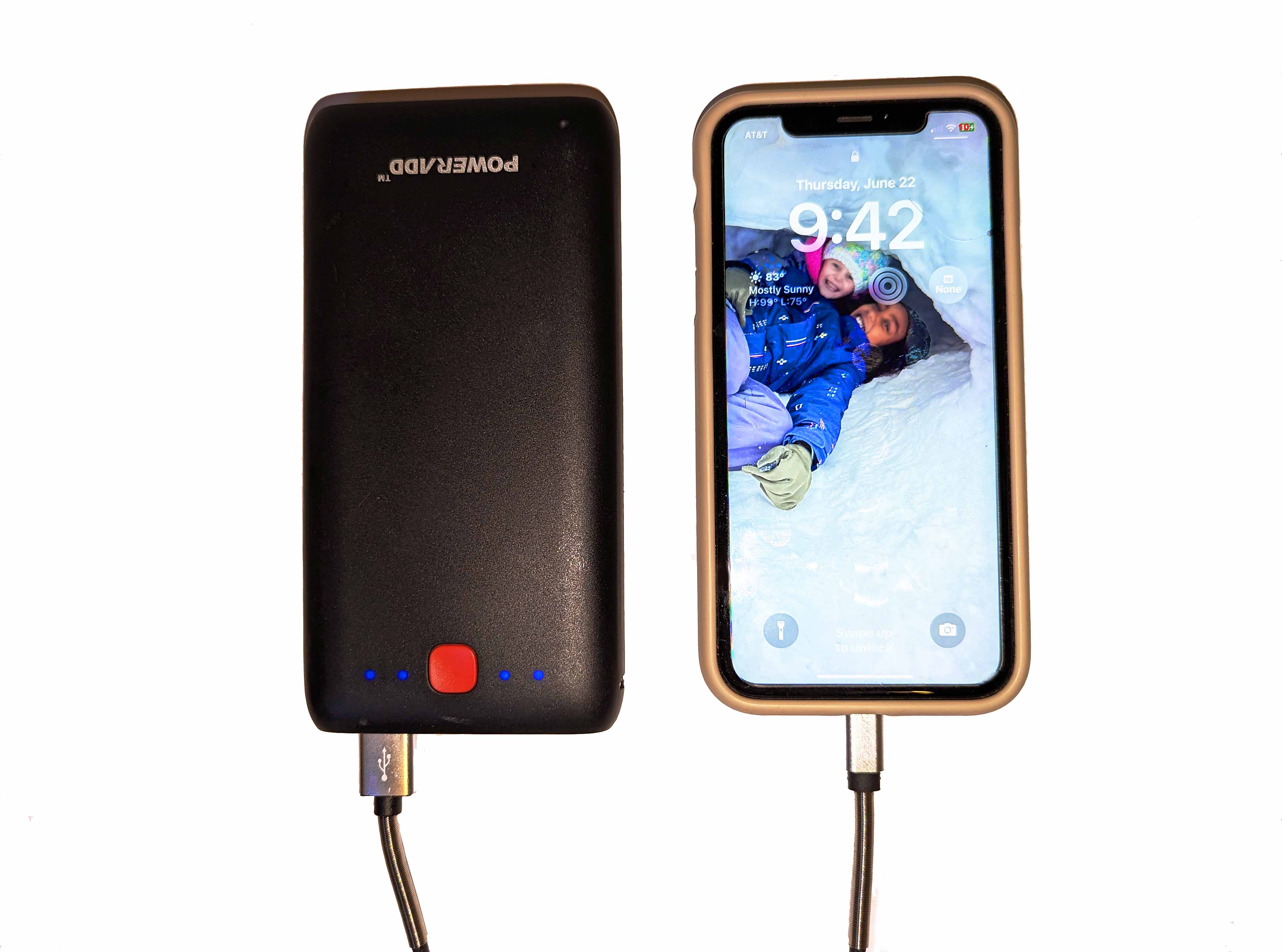
In this application, a battery-bank is an electronic device similar in size to your mobile phone, designed to function as a backup battery as well as a recharger. Those considered here are for mobile phones and other rechargeable small electronics such as tablets, Kindle Fire e-readers, cameras, g-sights, mobile radios, headsets, earbuds, hearing aids, and flashlights.
What to look for when shopping for a battery-bank?
Specific battery-bank product recommendations are at the end of this article.

If you plan to carry your battery-bank as we recommend, which is every-day-carry (EDC) in your computer bag, purse, knapsack, GO-Bag, or carry-on suitcase, it needs to be relatively small in size and reasonably lightweight. For most of us, this suggests a product that isn’t much bigger than a mobile phone, and weighs no more than 1-1/2 pounds (.68 Kg).
Unfortunately, since batteries are heavy, this introduces a limitation that is currently unavoidable until we have the benefit of commercially-viable lightweight batteries.
If your plan is to carry your battery-bank in your vehicle, a larger device becomes practical. However, this introduces the potential for it to be damaged by the effects of temperature, as both cold and heat can adversely affect a battery-bank. So if you plan to store your battery-bank in a vehicle, frequent condition checks are essential.
Battery Type: Battery-banks that use a rechargeable Lithium-Ion battery are far superior to those that use other types of batteries.
Multiple Uses: If you want a device that can charge more than one device at the same time, or more than one full recharge for your mobile phone, consider a model with a Lithium-ion battery rated at 25,000 mAh or greater.
Power Rating: Without getting into technical details, the mAh rating of a battery-bank is important but not the only consideration. Unfortunately, the higher the mAh rating, the heavier the weight of the battery-bank itself. With current battery technologies, this is unavoidable.
A simplistic generality is that as the weight of a Lithium-ion (Li-ion) powered battery-bank increases, so does its ability to deliver more recharge cycles. And, for those who are forgetful about scheduling a regular ‘top off’ recharge (2-4x/yr), a higher mAh rating is additionally important.
Practical Considerations: This brings to mind another practical reality. If a battery-bank is heavy or large, you may not keep it with you as an every-day-carry (EDC) device. And, if you don’t have it with you, it’s likely that you won’t have it when you need it the most. So, while a larger unit is technically more desirable, it may be a poor choice for you. Or, you may want to keep an ultralight unit with you for EDC, and heavier units at home, work, and in your carry-on travel bag.
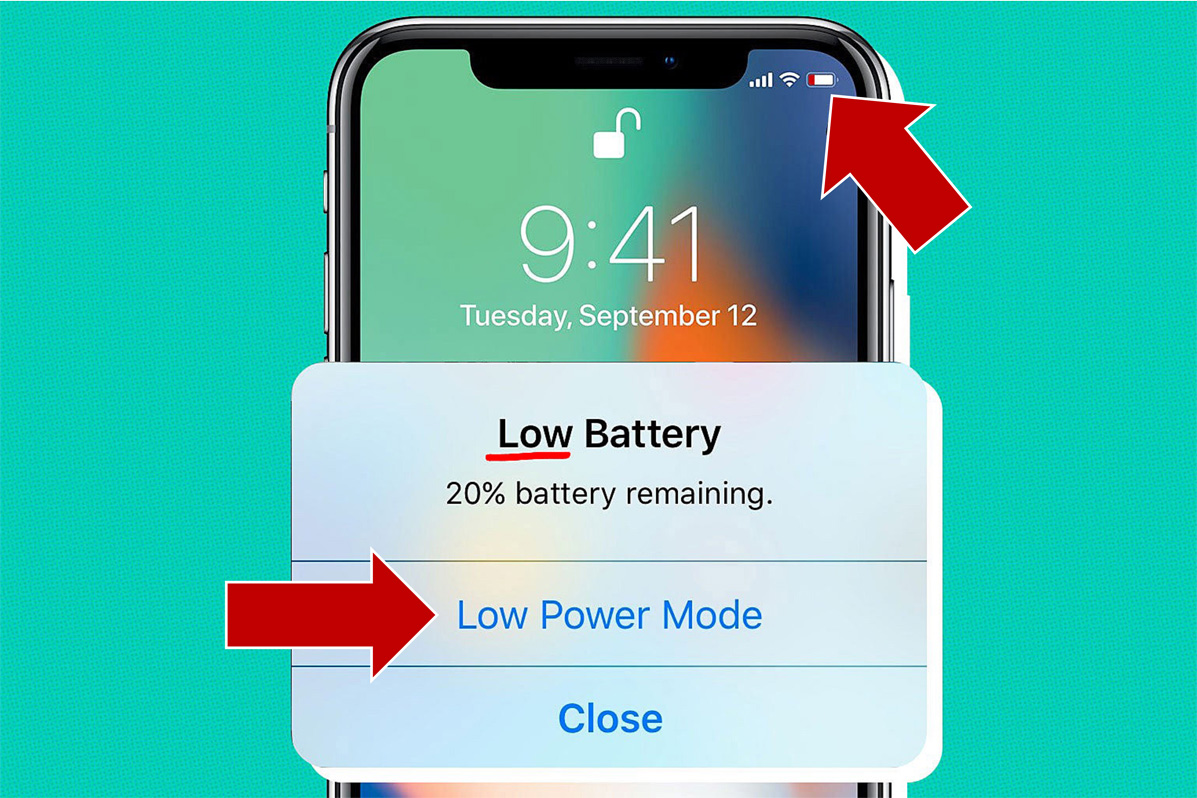
Use the Phone’s Low-Power Setting: If you find yourself in a situation where you may want to extend the life of your mobile phone’s battery, switch it to “Low Power Mode.” This reduces power drain by temporarily disabling non-essential apps that run in the background, draining power from you phone’s battery. To activate this mode, go to the “Settings” app on your phone, scroll down to “battery” setting,” and select “Low Power Mode.”
Top-10 Battery-Bank Tips and Specifications
1. Choose a battery-bank powered by a Lithium-ion (Li-ion) internal battery, and select a size and weight that is practical for you; a device that you will actually keep with you. Features are less important than to select a Li-ion battery-bank that is of a size and weight that is appropriate for you and your personal situation.
If you initially purchase a battery-bank that you later discover is too big or heavy, resulting in you leaving it behind, bite the bullet and buy a different battery-bank. There are many small, lightweight, relatively inexpensive battery-banks, so buy a second device.
Redundancy is important anyway, so an extra device is a good idea. Many people keep a small, compact battery-bank in their computer bag, and larger, feature-rich units at their office, car, and home.
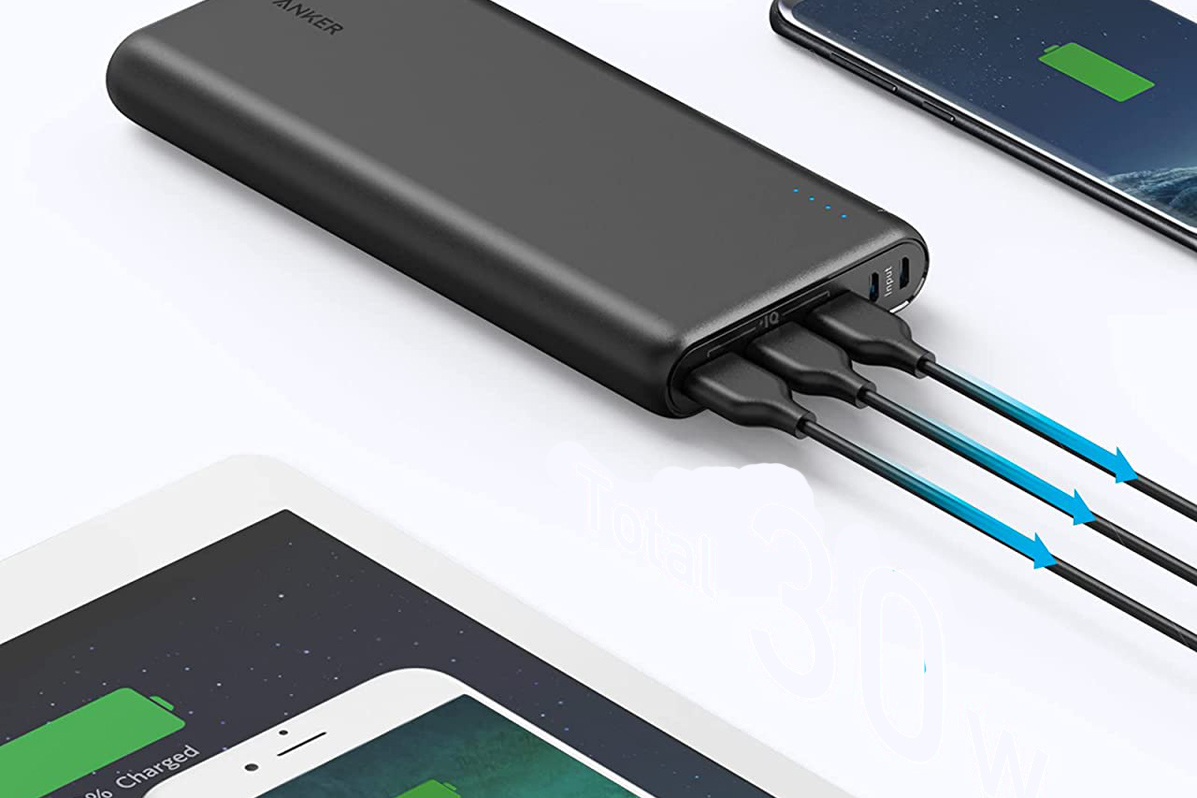
2. Ideally, select a battery-bank model with 2-3 charge-connection ports, as you may want to charge more than one device at the same time. Or, you may want to simultaneously recharge mobile phones that belong to family members or friends, or use the extra port(s) to charge your iPad, Kindle, emergency radio, or some other device.
Note: Except when specified, the battery-banks recommended in this article are not adequate for recharging a laptop computer or CPAP machine. These task requires a much larger battery-bank. Examples are included at the end of our list of recommended devices.
3. Don’t forget to purchase and store with your battery-bank, the appropriate accessories, such as power cords. (These come with some battery-banks, while others consider them to be accessories.)
A battery-bank without the appropriate charge cord for your phone, is worthless. And, since the connectors on your power cords are the most common point of failure, consider purchasing two short cords for your phone or any critically important device. Braided-shell short-length cords are more durable and require less storage space.
Consider keeping with your battery-bank, cords for all three of the most common connections for mobile phones, tablets, and other portable devices:
- Lightning (iPhone and iPad),
- USB-C, and
- Micro USB.
You may not need these cords yourself, but during an emergency, you might be a godsend to someone who needs help and has a phone requiring a different connector type.
4. If your battery-bank doesn’t come with its own recharger to plug it into a 110/220v wall outlet, buy a compact recharger compatible with your unit and keep it with your battery-bank. Note: Many battery-banks cannot deliver a charge when plugged into a wall outlet.
5. Select a battery-bank with over-charge protection to prevent the device’s internal battery from being overcharged, plus a ‘monitored power’ feature, so it doesn’t overcharge your phone or other devices you plug into it.
6. While a flashlight may sound like a superfluous feature for a battery-bank, having a light can be a lifesaver, even if it’s only to help connect a phone to the battery-bank during a night-time emergency.
For most people, having a light that serves to illuminate an area, or works as a reading light, is more useful than a bright, narrow-beam flashlight. While this feature isn’t essential for a battery-bank, it is something to consider, especially if you don’t routinely carry a pocket-size flashlight.
7. Choose a battery-bank that is at least water-resistant if not waterproof. In an emergency situation, you may need to use your battery-bank outdoors.
Heavy rain or flooding are common causes of power outages, so in many emergencies, a battery-bank may be exposed to rain or wet operating conditions. If the device you select isn’t water-resistant, store it in a Ziplock plastic bag or a waterproof container.

8. Solar battery-banks with a self-contained solar panel intended to recharge it using sunlight, are typically useless. With most “solar” battery-banks, the panel is far too small, making the “solar” feature little more than a marketing gimmick. However, exceptions exist, such as the folding solar panel battery-bank included in our product recommendations. (Illustrated in this photo.)
While solar recharging may not be a feature you have previously contemplated, it is worth considering. Protracted grid-down emergencies are increasing in frequency, so this may prove to be a very useful feature.
If you decide to purchase a solar battery-bank, search for a model that has a self-contained solar panel that will deliver at least 12 watts of power. Another option is to purchase, as an accessory, a small backpacking-style solar panel that is compatible with your battery-bank.
9. Most battery-banks are charged using a USB charge cube, similar to the one you use to plug your mobile phone into an electrical wall outlet. If the battery-bank you select doesn’t have a built-in plug to connect it to a standard electrical outlet, consider storing a charger with your battery-bank (and the appropriate charging cord).
Recharging: Your battery-bank needs to be fully charged before its first use. After that, it must be checked after three months of storage to evaluate its ability to hold a charge. Expect to ‘top-off’ your battery-bank’s charge 2-4x/yr.
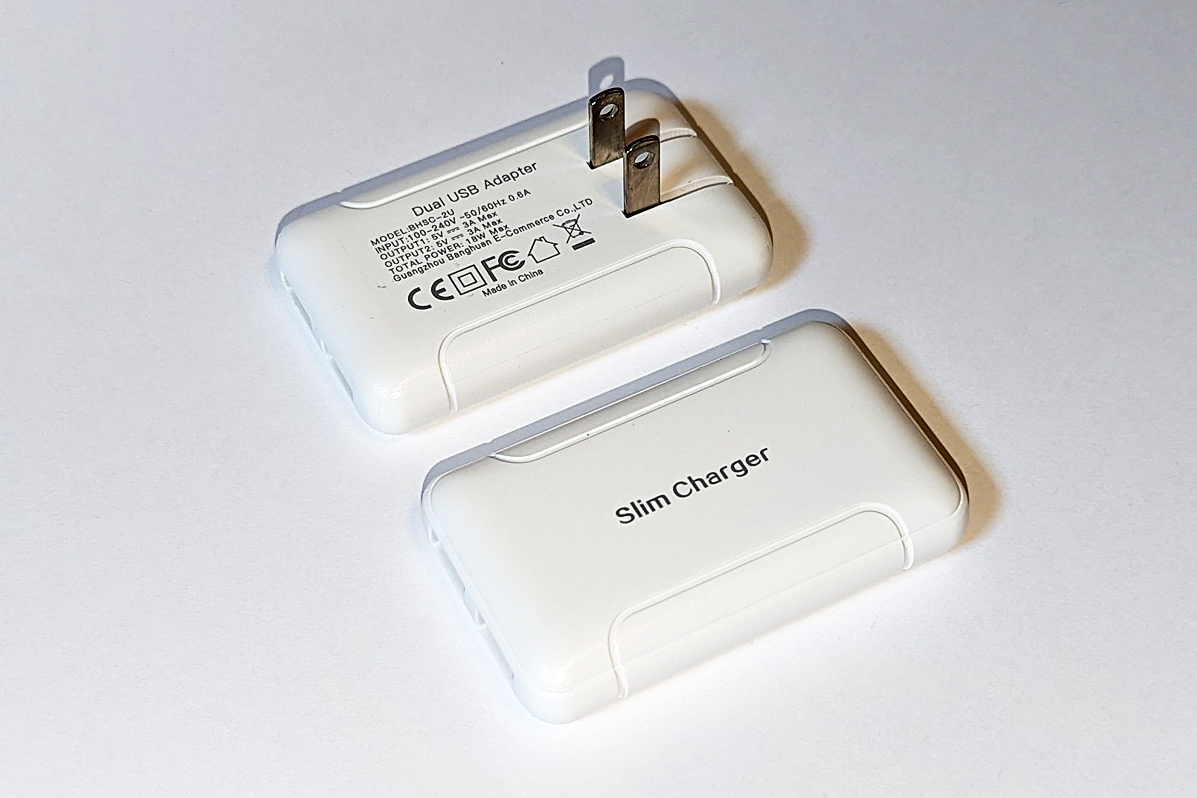
If the battery-bank you select doesn’t have a built-in charger, consider storing a charging cube with your battery-bank. If you purchase a USB charger to keep with your battery-bank, select one that is not only compatible with your battery-bank, but also flat, with plug prongs that fold into the charger. This makes it less susceptible to damage.
10. For travel, consider including with your charger cube, a lightweight electrical extension cord. This extension cord may let you put off using your battery-bank until you don’t have another option. Though many facilities are adding more USB and electrical outlets, during times when people are stranded at airports and other public places, if you have a 6-10’ (2-3 m) electrical extension cord, you may be able to convince someone to share their outlet with you.
If you are using a 3-prong (grounded) extension cord, also include a ‘3-prong to 2-prong’ adaptor, in case your only option is to use an old-fashioned electrical outlet that won’t accommodate a 3-prong plug.
If you don’t want to pack an extension cord, at the very least, include an adapter plug that transforms a single outlet into three.
Test Your Battery-Bank
When you first get your battery-bank, charge it overnight. Most require a full charge before use. After it’s fully charged, give it a try.
Wait until your phone has 25-30% remaining power, connect it to your battery-bank, and monitor how long it takes to return it to a 75% charge. With most battery banks, this will take 3-4 hours. (With most battery-banks, bringing a mobile phone up to 100% power will take a very long time, so a 75% charge is a more practical and useful goal.)
As with any new piece of emergency equipment, test your battery-bank to ensure that it works properly. And, make sure you know how to use it without consulting the printed manual.
Storing Your Battery-Bank
Keep a wall charger and charge cord for your battery-bank, plus the power/recharging cords for the phone(s) and devices you intend to charge, as well as the battery-bank operator’s manual, together with the device itself. An easy storage method that helps protect your gear, is to pack everything into the same Ziplock bag or durable, watertight container.
Ziplock Mylar bags or EMP pouches are a great option, too, as long as they aren’t heat sealed. (A sealed bag may discourage you from undertaking the needed, periodic ‘top-off’ recharging of your battery-bank.)
Irrespective of marketing claims, the electricity stored in most battery-banks will dissipate over time, so mark your calendar to help you remember to ‘top off’ the charge of your battery-bank. This task needs to be more frequent if your bank has a low mAh rating, or if it is exposed to heat or cold. Note: A fully charged battery-bank is more resilient in freezing temperatures than a partially charged unit.
Recharge Frequency: With these relatively inexpensive Lithium-ion battery-banks, plan to top-up your bank’s charge 2-4x a year. While some manufacturers claim this isn’t necessary, our experience mandates this until your personal experience with your battery-bank suggests a different plan. In our limited test, our $35 Lithium-ion battery-bank lost nearly a third of its charge after one year of storage.
Product Recommendations
For your convenience, most of the below links will take you to Amazon, but you may want to shop for these highly rated products in other stores. Either way, the link provides a place to start your search for a battery-bank(s) that will meet your requirements. Since personal needs differ, the following recommendations are listed by category.
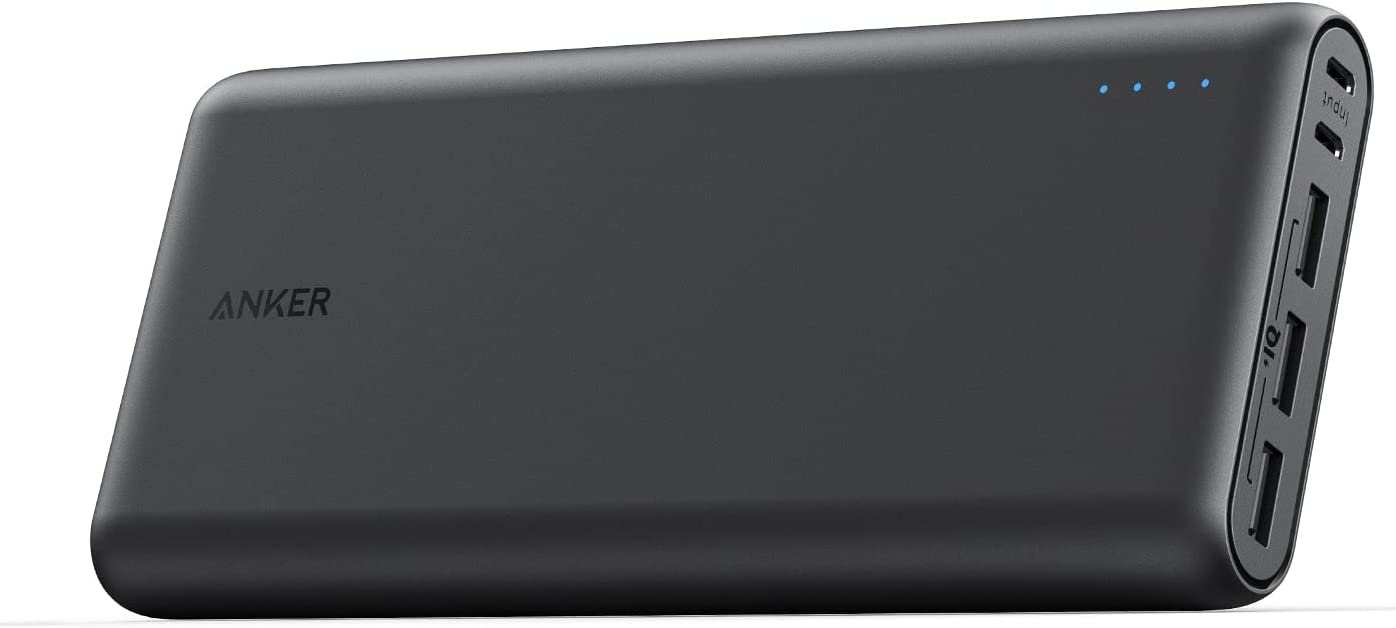
Top Rated Battery-Bank for Every-Day-Carry (EDC) in a Knapsack or Travel Bag.
Anker 337 PowerCore 26K, 26,800mAh
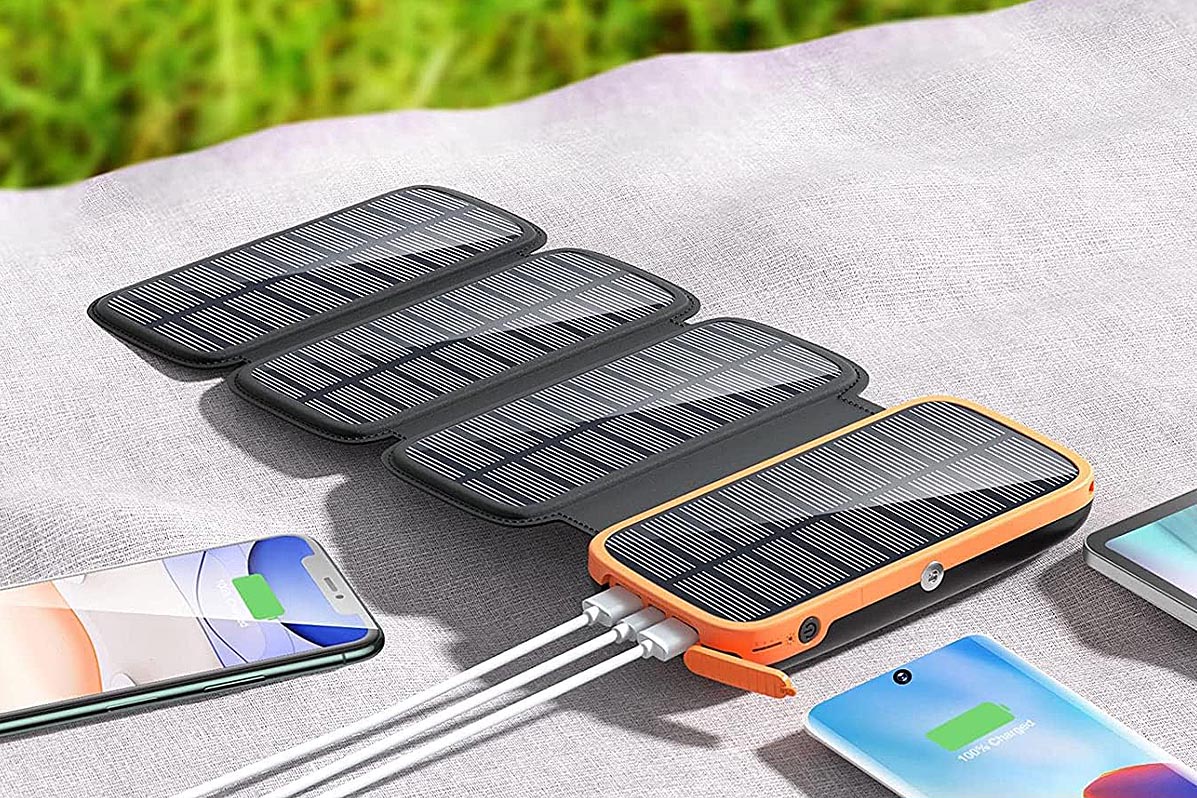
Top Rated Solar Battery-Bank
CONXWAN Solar Charge Power Bank,
27,000mAh
* Top-Rated Compact, Lightweight Battery-Bank

Lezchi Ultra-Slim Power Bank with Built-in Power Cords and Self-Contained Charger, 10,000mAh, 9oz/.25kg
Top Rated Durable, Waterproof (IPX6), Small-size
ABFOCE Outdoor Portable Charger, 10,000mAh, 9.5oz/.27kg

Top Rated Battery-Bank that Uses Disposable Batteries
Luxtude MyColors Power Bank, Requires 4 AA-Batteries (1x phone charge), 5,000mAh, 5.5oz/.16kg (weight without the required disposable batteries)
Note: The primary value of this product category is that these units use standard AA batteries which are widely available in convenience and grocery stores. If this device is stored with disposable Lithium batteries, this battery-bank can remain viable for as many as 15-20 years without the bother of recharging. (While standard Alkaline batteries will function in this unit, they are prone to leakage, making them incompatible for long-term storage.)
Even though a set of four batteries will typically only recharge a mobile phone once, the extended shelf-life, small size, light weight, and multiple uses of AA batteries, make this battery-bank worth considering. This device is especially useful for inclusion in GO-Bags, survival kits, and other applications that involve long-term storage. However, we do not recommend this unit for long-term storage unless it is packaged together with disposable or rechargeable Lithium batteries. And, we do not recommend similar-looking units that use a smaller-size battery, nor those which use less than four batteries, as they typically don’t deliver adequate recharge performance. As with all electronics, do not store them with the batteries installed in the unit, as most will trickle-drain the batteries over time, thereby reducing shelf-life. Storing electronics with batteries installed, also increase the risk of battery leakage, which may render the device inoperable.
Top Rated Pocket-size Low-Cost Battery-Bank (1x Phone Recharge)
EnergyQC Fast Charging Portable Charger, 5,000mAh, 4.6oz/.13kg
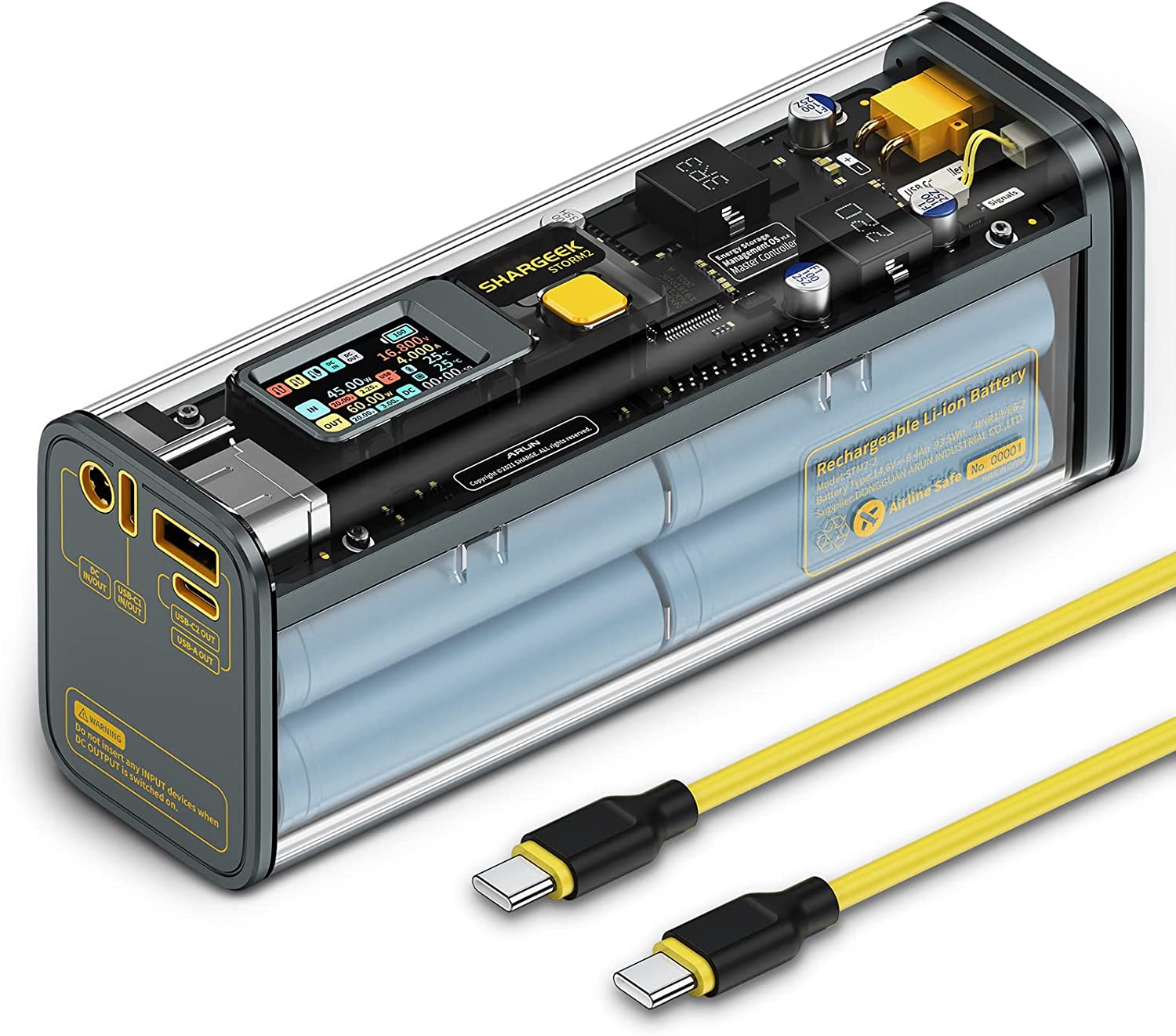
Top Rated Laptop Back-up Battery (Small, Carry-on Compatible)
Shargeek Portable Charger, Storm 2 100W, 25,600mAh, 20oz/.57kg
Top-Rated Small Battery-Bank & CPAP Battery-Supply
Renogy 72000mAh 266Wh 12v Power Bank with 60W PD, 72,000mAh, 2.8 lb/1.27kg
Note: 12-v or another type of adapter will be required to connect your CPAP machine to any battery-bank. Also, devices such as this that contain a higher capacity battery, may not be allowed on a commercial airliner. Check with your airline prior to travel.

Top Rated Battery-Bank for Home or Office (Larger in size and far more robust capabilities)
Jackery Portable Power Station, Explorer 500, 518Wh Outdoor Solar Generator. Solar panels are optional but recommended. (Compatible with solar panels from the same manufacturer.) This device will recharge a laptop computer.
Note for Air Travel: At the time this article was written, travelers on commercial airliners in the U.S. are subject to FAA regulations which limit an individual traveler, to one Lithium-ion battery-bank in their carry-on luggage, and it cannot exceed a power rating of 100 watts (Wh). However, if declared to the airline, an individual passenger may be able to transport up to two Li-ion batteries that are each rated at up to 160 watts (Wh). However, since these regulations seem to be continually in flux, we recommend checking with your airline in advance, if you intend to travel with a battery rated above 100 Wh.
Lastly, we hope you will consider making a battery-bank an essential part of your every-day-carry (EDC) gear. We agree that it’s a bother. It certainly is, but a little device such as this may literally change a life-or-death situation into an easily managed event. If you decide to not carry one with you as an EDC, at least store one in your car, home, and workplace. Preferably, all three.
Still, an inexpensive but top-rated battery-bank is far better than none at all. Our top-rated ‘compact and lightweight’ device which is listed above, is a low-cost unit that is feature rich. It’s also a great gift to give friends and family members. This article was written to help you be better prepared for an emergency situation, but the gift of a battery-bank to a loved one may literally prove to be a lifesaver.
 READINESS UNIVERSITY
You must be logged in to post a comment.