
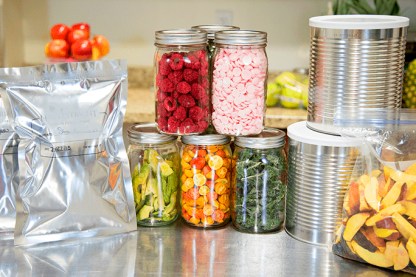
 Give to charities, help them, but don’t need one yourself. Plan ahead and get ready, now. The frequency of major disasters is on the increase, aid is often slow or inadequate, and recovery is typically a many-month process. Yes, we need to help others, but we, ourselves, need to be wholly self-reliant.
Everyone needs a 3-week supply of water and ready-to-eat food as a hedge against being isolated by a natural disaster. But that is just a place to start. It’s not enough. We also need to maintain a supply of food to sustain us long term. For most of us, a do-it-yourself solution is the most viable option.
In addition, we need to consider emergency “tools” of various sorts, plus the storage of radios and other electronics that will needed in an emergency situation. These same DIY long-term storage methods are adaptable to all of these needs.
Unfortunately, even canned food bought at a grocery store has a relatively short shelf life, especially products that contain meat (fat) or acid (such as tomato products). Conversely, buying a large quantity of freeze-dried emergency food, which is a great option, is very expensive. Fortunately, there are other options that make this undertaking easy and that deliver a 25-35-year shelf life.
Prepackaged freeze-dried food is the way to go if you have an unlimited budget, the actual cost is generally twice that of what the sellers of these foods claim. It is staggeringly expensive to purchase the amount of freeze-dried food you will actually need vs. the number of servings/meals claimed on the product’s label.
Check the calorie information on the product label. Is it nutritionally balanced? Keep in mind, too, that in an emergency situation, 3,200 calories a day is the minimum need to remain operational. (According to the standards set by the U.S. Department of Defense.)
Thankfully, with a modest amount of effort and a small investment, it is easy to develop an emergency food supply that meets our dietary needs and even accommodates our food preferences. By using the D-I-Y methods explained in this article, you can create an emergency food supply that tastes good, is reasonably nutritious, and has a shelf life that rivals the expensive retail options.
Review: Basic Short-Term 3-Week Emergency Food Supply
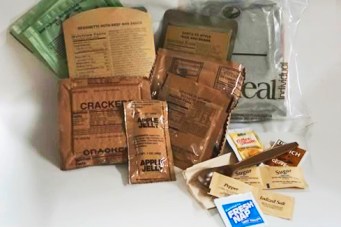 A combination of military-grade MREs and ordinary canned foods is the place to start. A variety of familiar foods is especially important for children.
MRE Meals: The U.S. military uses Mylar bags to protect meals made for combat and field operations. Mil-spec MRE military “meals, ready-to-eat” entrees are packaged in Mylar bags and retort Mylar pouches and are simple to prepare, have their own flameless heater, and are designed to be eaten right out of their bag.
MREs are field rations; individual meals for warriors who do not have access to kitchen-prepared food. These have replaced military “C-ration” meals which were packed in metal cans. Why did the military switch? It’s because Mylar packaged meals are lighter to transport. And, so durable, that when necessary they can even be dropped from an airplane without a parachute.
Canned Food: For those who are preparing a 3-week emergency food supply for their home or office, MREs and ordinary canned foods are a fine choice. But for a longer-term supply of food, other options may be better since MREs are relatively expensive and require a lot of storage space. And canned food, the other commonly chosen option, are heavy if the need arises to transport your food supply. Additionally, though MREs and canned food can often be safely eaten past their expiration date, these military meals and canned food only have a stated shelf-life of 5-years.
Remember, it is also necessary to have a 3-week supply of pure drinking water. A minimum amount of pure water to store is sufficient for 1-gallon of pure water, per day, for each person in your household. For a family of four, this equates to 84-gallons of stored water. Plus, the means to purify additional water if necessary. Click Here for more on this topic.
Evaluating Options for Extending the Shelf-life of Food:
5-10+ Years, and 25-35-Year Methods.
First, a Review of the Best D-I-Y 25-35 Yr Shelf-Life Food Storage Methods.
 Mylar Bags
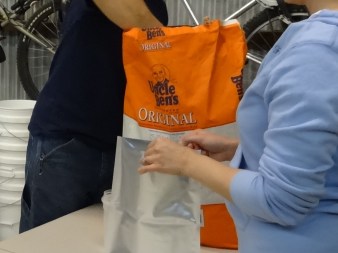
Do-it-yourself ‘Mylar bag’ storage is the least expensive method for accomplishing long-term (25-35 year) food storage. It can be downright cheap if you purchase bulk dry foods and supplies from discount sources. And, no special tools are required, either.
What is Mylar? Mylar bags are metalized plastic bags, delivering the attributes of both metal and plastic for extending the shelf-life of food. Plus, they have other long-term storage benefits, as well.
Each Mylar bag is a laminated combination of polyester, aluminum, and food-grade polyethylene. Genuine Mylar bags are 100% food safe and BPA-free. Constructed of the same material used for the ‘space blankets’ developed by NASA, and used by militaries and local emergency services worldwide, these bags are durable, airtight, and waterproof when properly sealed.
Step-by-step instructions for using Mylar bags can be found in Part-3 of this series, “Mylar Bags, a Step-by-Step Guide for Packing Emergency Food and supplies.”
Links and recommendations on what to purchase, are found in the companion article, “Mylar Bags: What You Will Need for this D-I-Y Project.”
 Steel #10 Cans (105 oz)
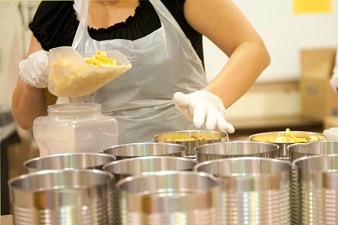
While it’s true that storing food in hermetically sealed metal cans provides the best long-term protection, the sealing equipment and supplies are expensive to purchase. But for those who want to investigate this option, visit the website for House of Cans. They sell empty cans and both flywheel hand-crank and electric sealing machines designed for roll-sealing #10 (105 oz) food-grade steel cans.
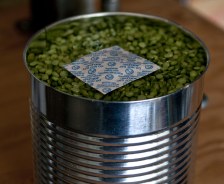 Both lined and unlined #10 empty cans are readily available for do-it-yourself food packing, but for those selecting the more durable lined cans, be sure the coating is suitable for canning food. Liquids generally require the use of lined cans and a different canning procedure. Just as with Mylar bag food packing, to achieve long shelf-life with dry goods such as rice, beans, dried split peas, an oxygen absorber packet needs to be added just prior to sealing the steel can.
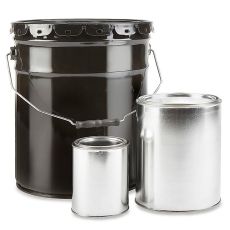 Unused, New Paint Cans
Fresh, empty (new) paint cans are another alternative, but when used alone, these do not deliver long-term storage of food. However, when lined with a Mylar bag and sealed as described below and in the companion article on Mylar bag food packaging, the result is a rodent-proof and durable solution. (Plastic buckets and barrels do not provide rodent protection.) Do not store food in a paint can that has previously held paint or anything else.
Note: Even a new paint can is not a food-grade container. These cans are only suitable for food storage if they are new and lined with a properly sealed Mylar bag. To be suitable for food storage, most steel containers should only be used with a properly sealed Mylar bag(s).
Mylar bags as stand-alone food storage containers: Mylar bags used alone, without a steel bucket, can, or drum, are still capable of delivering a 25-35 year shelf-life and at a much-reduced cost. The only downside is that they are not as durable or rodent-proof as a Mylar bag that has been sealed inside a steel container such as a new paint can, galvanized garbage can, or steel drum).
Note: If you use a steel container that has been previously used for another purpose, make sure it did not previously contain a toxic or unhealthy product.
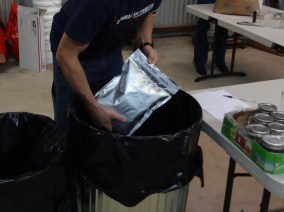 About Steel Cans and Containers: Unlike Mylar, steel paint cans and other steel containers do rust. And, their round shape makes them inefficient for compact storage. They are also space-inefficient for compact storage and transport.
Still, when used in combination, it’s a perfect solution. A steel container with a tight-fitting lid, that is used to store heat-sealed Mylar bags of food which also contain oxygen absorbers, will provide the best of both worlds for long-term storage of food and other supplies.
For those who can afford the cost, this is the best do-it-yourself, highly-durable and transportable, long shelf-life storage solution.
Recap of 25-35 Year Shelf-Life Options
When used alone, even a heavy-duty heat-sealed Mylar bag is not nearly as durable or rodent-proof as is a steel container. Yet, this shortcoming is wholly mitigated by proper storage, such as putting your food bags in a steel footlocker or a new galvanized garbage can. Heavy duty Mylar bags of food, combined with fresh oxygen absorbers inserted just prior to sealing, provide an inexpensive food storage solution that has the capacity to deliver a long shelf-life that is equal to, or better than any other D-I-Y food storage method.
On the other hand, food-grade steel #10 cans such as those sold by House of Cans and other food canning suppliers, used alone, without Mylar, can be a great choice. But, this method is only viable when this do-it-yourself method is combined with the proper use of a quality flywheel lid/can sealer and oxygen absorbers. Though far more expensive than Mylar bags, this one-step method can deliver long shelf-life PLUS reasonable protection from damage and rodents.
Whereas new, unused paint cans, even when properly sealed, are NOT completely airtight nor is a paint-can food grade, so without a Mylar bag used as a liner inside the can, it is unsuitable for food storage. Those who use Mylar bags inside a #10 can or unused paint can, will achieve added redundancy (a higher level of protection), but not a longer shelf-life under normal conditions.
Other Popular D-I-Y Food Storage Options
5-10+ Year Shelf-Life Options
 Glass Jars – Traditional Canning
Glass jars are popular for preserving food, but they are not the best container for long-term food storage. Plus, the canning process is far more expensive, can be labor-intensive, require more production time, and equipment that most people don’t have.
Also, filled jars are very heavy and fragile to transport, and they require a lot of space to store. Absent specialized storage solutions, stacking glass jars is unsafe. And, stacking cardboard cases which contain jars, is risky as water exposure will collapse the stacked boxes.
The benefit of glass jar canning is primarily the storage of wet foods and food containing dairy, meat, fish, or fat. However, most people are unable to obtain 25-year or longer shelf-life using this method. A shelf-life of 5-10 years is more common for traditional glass jar canning methods.
Advocates argue that glass jars can be reused repeatedly and Mylar bags cannot. This is mostly true, but Mylar bags are still the winner for D-I-Y long-term food storage. Mylar bags of food are easy to pack, stackable, easy to store, they are compact and lightweight to transport, and they provide increased durability. All of these features at a substantially lower cost than buying glass jars.
For example, the purchase price of 1,000 1-quart canning jars is approximately $1,200, whereas the same quantity of 1-quart Mylar bags is only $250. So Mylar delivers a 75% cost saving, and Mylar packaging methods are easy and fast. Notwithstanding, canning food in glass jars is worth considering for some foods, especially wet foods, but when it comes to packaging dry goods, such as rice and beans for a long-term food supply, glass jars are far less than ideal. However, since glass jars can be re-used to preserve food which you harvest during a prolonged emergency, you may want to store some food in these glass containers. But, don’t forget to buy extra lids and seals, and canning equipment that can be used without electricity.
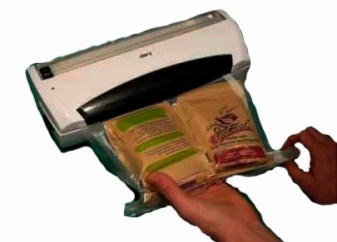 Vacuum Packing, Plastic Bags, and Plastic Food Buckets
Plastic, including heavy-duty and specialized food and freezer bags, is not adequate for long-term food storage. The same is true for hard plastic bins and food-grade plastic buckets, including those with Omega lids.
Even thick, heavy-duty ‘food grade’ plastic is air permeable so it cannot protect food for more than a few years. This deficiency is also a characteristic of pre-packed plastic drums and plastic buckets of commercially packed food sold as long-term ‘survival food,’ as well. Containers which use a heat-sealed Mylar bag liner deliver a longer shelf-life, but even those touted as being “rodent proof” containers will protect the food from persistent rats and squirrels.
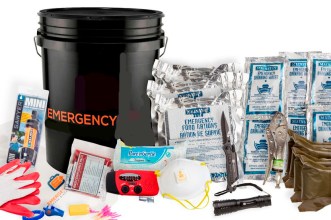 Food Buckets to Give Away: Perhaps the best use of 5-gallon plastic buckets is for preparing “give-away” gift buckets of food and emergency supplies. If you are a compassionate person, you may want to assemble plastic buckets which contain Mylar bags of rice and beans, a cooking pot (thrift store), fire starting supplies, tube tents or space blankets, a plastic tarp, paracord, and water purification tablets. If a person is destitute this will be invaluable to them. But if they’re just lazy and just looking for a handout, they’ll turn up their nose at this collection of invaluable emergency supplies.
Conclusions on Food Storage Options
Metal #10 cans, Glass canning jars, and Mylar bags all meet the six food storage requirements listed in our related article, “Foods for Long-Term Food Storage.” However, glass jars are too heavy, space inefficient, expensive, and fragile for storing a large quantity of emergency food, long-term. And, plastic storage containers are equally problematic. Even thick food-grade plastic buckets, as well as heavy-duty plastic vacuum-packed pouches, are inadequate for the task of long-term food storage. Over time, even the best plastics cannot stop the infiltration of oxygen and moisture, and they will not block the smell of food from predatory animals and the gnawing rodents who can easily chew through even the toughest plastics.
In short, Mylar bags, stored in a steel container, are the best choice. And yet, this needn’t be an expensive undertaking. A new 35-gallon trash can or even a used but unrusted 55-gallon steel drum, are relatively inexpensive and space-efficient ways to store your filled Mylar bags.
More About Mylar
What is Mylar?
Invented in the 1950s, Mylar bags are essentially a flexible metal container. Invented by Dupont for NASA and the U.S. military, today, Mylar has many broad uses and beneficial properties which make it popular with do-it-yourselfers. Importantly, Mylar bags are impervious to air and moisture and can be heat-sealed at home using simple D-I-Y methods.
Though Mylar is not as durable as a well-stored metal can, and even heavy-duty (7-mil) Mylar bags are susceptible to damage if roughly handled or improperly stored, for long-term storage, they are still far superior to even the thickest hard-shell plastic containers. When the goal is long-term food storage, Mylar bags are the best solution available to us today.
Heavy-duty Mylar bags (7+ mil) are the unsurpassed choice for D-I-Y long-term storage, but medium weight bags (5-mil) are easier to seal and still provide reasonably long shelf-life. Notwithstanding, for storing food in 1-gallon or larger quantities, we strongly recommend using 7-mil bags.
Standard Mylar bags are thinner, 3.5 mils, so they are easier to heat-seal. These are adequate for some purposes, but we recommend using heavy-duty (7.5 mm) bags for everything. The only exception is small quantities of lightweight foods, such as spices, dried herbs, salt, and sugar, packaged for storage inside a larger Mylar bag.
For those who intend to use an ordinary, household clothing iron to heat-seal their heavy-duty Mylar bags, it will take some practice to find the best heat setting and develop the technique. But with a little practice, many find it to be an easy project, even first-timers. Notwithstanding, if you plan to pack a large quantity of food, we recommend spending $100 on an impulse heat sealer such as the ShieldPro FS-305. It can quickly produce a uniform, reliable heat-seal on 3.5-7.5mm Mylar bags.
Rotation of Food Supplies
Use and replace your food supplies on a regular basis. Or, at the very least, annually open a bag(s) of food and prepare it to make sure your food supply has remained fresh. Set a schedule; set calendar reminders to inspect your food supply for damage or problems.
Even though many of these foods can have a 35+-year shelf life, after five years, we recommend initiating an annual cycle of replacement. Replace at least 1/4 of your emergency food supply annually—or add new supplies annually equivalent to an additional 3-month supply of food. Add these fresh supplies to the food that you previously stored to increase your available quantities.
At a minimum, maintain a one-year supply of nutritionally balanced food at your home or safe-haven retreat location. With this rotation process, don’t discard food that old but appears to be unspoiled. During an extended emergency situation, you may need it. At the very least, when the need arises, donate these older food stocks to neighbors who are in need.
Final Thoughts: Be charitable, but…
It may sound harsh, but don’t sacrifice emergency food and other long-term supplies that you may need. Your first priority is to care for your own family and the friends who participated in developing your long-term food supply.
Helping widows and orphans is an important but separate issue. One that should be planned for, in advance.
However, when it comes to the general population, you do not have a responsibility to feed negligent people who failed to prepare. This may sound harsh. And, it may be difficult to accept, especially when hungry people start knocking on your door. So think about these heartwrenching circumstances now, before you encounter them.
How will you handle it? How will you respond when approached by neighbors looking for food? What will you do if you are confronted by an armed robber who demands your food? (Another reason why it’s best to evacuate early to a remote, safer location.)
For responsible people, our desire to love and help those in need must be considered as secondary to loving and helping our own immediate family and their safety. They come first. If you disagree, that’s your choice, but make these difficult decisions now, well in advance of confronting these situations. Who will you help? What will you do to help them, and how long will you feed empty-handed friends or strangers who ignored the signs of the times?
This approach isn’t new. It has stood the test of time and is even referenced in the Bible; see Matthew 16:2-4; 25:1-13; Proverbs 6:6-11; 22:3.
 READINESS UNIVERSITY
You must be logged in to post a comment.