

Until now, we have never included an editorial on this website. However, since our team agrees that we expect near-future civil unrest, food shortages, economic instability, and difficulties obtaining essential supplies, we have made this exception. We are therefore publishing this editorial, written by our editor-in-chief, to encourage our readers not to be fearful about the future but to be diligent, motivated, and focused on this task as a priority. Our message is simple. We must move forward aggressively with our emergency preparations for ourselves, our families, and our communities.
– – – – – – – – – – – –
When I was a kid, and the winter weather cooperated, I would build a snowman. On one such occasion, I was on a hillside, and as I rolled my large snowball over the snow-covered ground, the ball became bigger and bigger. It eventually became so heavy that it broke free from my grasp. It rolled slowly at first but then gained speed as it continued to roll and increase in size until it eventually became an out-of-control truck-like object that damaged everything in its path.
Social unrest is like this snowman-building experience. Those who manipulate society roll along with their agenda, feeding their own egos as they work to transform society into what they envision. As their efforts are rewarded with grander effects, their machinations grow exponentially until they lose control, and the ‘Rule of Unintended Consequences’ takes over, turning their once manageable snowball into an uncontrollable avalanche.
Civil unrest inevitably follows when social manipulation is the focus of these efforts. Whether sourced in a plan for anarchy or a misguided but well-intentioned social engineering effort, these manipulative efforts are often rewarded by a series of out-of-control adverse effects.
Added to this is an assortment of other existential threats, any of which could bring catastrophic consequences. Some of these are always present, but in our current era, we face more than thirty significant threats to our way of life. With this comes the likelihood of several coming together to form a cascading series of events, which, like the snowball in my illustration, build on each other like additional layers of snow. Together, they can quickly create an out-of-control accelerating ball of disaster that can wreak havoc on our way of life.
Today, those who stir up emotional responses to problems, feed class warfare, or increase racial and political divisions are running on a path that leads to civil war. This is true for the United States, Europe, the UK, and other countries where “Progressives” try to manipulate change.
Currently, we are close to a tipping point. Once political and social situations snowball downward and other threats are added into the mix, there will be no way to stop tragic outcomes until the momentum is exhausted by social collapse. At this point, we can expect a wide swath of destruction. This now seems inevitable, at least in our major cities.
During this era of growing civil unrest and distrust, we can expect isolated incidents of violence to morph and become widespread. In our current environment, this can quickly escalate due to the perpetrator’s inability to control the outcome. These developments will invariably be accompanied by negative social consequences, community destruction, the death of innocent people, and animosities that will take generations to heal.
At this point, this outcome seems inevitable. The only uncertainty is timing. Therefore, responsible people need to get ready for what is coming.
In the days ahead, we can’t expect the government to come to our aid, so we must be self-reliant and involved in our local community. While the responsibilities of citizenship mandate informed voting, it is at our local community level where we can facilitate grassroots solutions and encourage individuals to be prepared. Community is essential.
Why is this this turmoil happening? What we are seeing is a repeat of what has happened in the past: A small number of people and entities desire power and influence, but they don’t have the depth of character nor the ability to earn their leadership through legitimate socially beneficial means, so they opt for deception, delusion, and manipulation. It is the self-absorbed coward’s route to power.
Much like the terrorist leader who encourages children to strap on an explosive vest and become a suicide bomber, our modern social agitators operate behind the scenes. They hide behind those who they dupe into becoming their pawns. This is what many observe to be behind organizations such as Black Lives Matter, Antifa, the pro-Palestinian and anti-Semitic movements, La Raza, the criminal/political cartels, as well as the machinations of the nonmaterial entities. It’s the confluence that will initiate a perfect storm.
Unfortunately, the manipulators are rarely held accountable. They aren’t the ones who have their business burned or their families attacked; seldom are they the ones who suffer or die. They are the string pullers, controlling their simpleton puppets who are reactionary rather than thoughtful, emotionally selfish rather than caring. They pull the strings, seemingly without a guilty conscience or concern for those harmed by their gamesmanship. Ultimately, they have a disdain for humanity. Regrettably, the checks and balances of our judicial and political systems are not providing accountability and justice.
Regardless of the outcome of current events, these manipulators will continue to promote failed agendas that bring heartache. For some, their personal agenda is power, while for others, it is death and anarchy, but both revel in their elitist quest for power that the devil is happy to loan them.
Yet, most of us simply want to be left alone. We don’t want to deal with these entities or the situations they are busy creating. Since we are not seeking power or agendas, we hope the incidents of violence that these manipulators and pawns create will fade away (or at least not affect us). But this normalcy bias is also destructive. It, too, is part of the confluence that will produce serious, very negative, unintended consequences.
Just as disaster preparations are prudent, so are emergency-situation preparations. In the months ahead, we will doubtless see various natural disasters, but the emergency situations we now anticipate will be more widespread and have prolonged, protracted effects. Therefore, we need increased situational awareness, additional knowledge, and wise, comprehensive planning. We must identify proactive strategies to help us overcome the inevitable effects.
By definition, emergency situations are similar to natural disasters such as earthquakes or hurricanes, but an “emergency situation” also includes disasters based on a human cause. This makes them more complex and the danger more protracted because they are accompanied by motives and actions that continue long after the initial event.
Preparing for civil unrest is similar to preparing for a major storm, so we won’t rehash those details here. We want to emphasize that situational awareness and prudence are only our first line of defense. If you don’t have good common sense, follow the lead of someone who does. Your life may depend on it. And if you don’t have provisions, defense, and sustainability skills, find a team you can join and tackle these tasks together. In real life, the Lone Ranger does not survive.
Your situation is far more precarious if you live in or near a major city. Once violence becomes rampant, good people often try to get away. They typically flee the harm they fear. This is to be expected. And with this, ordinarily tranquil, rural areas will also be adversely impacted because these city dwellers are not provisioned or prepared.
Whether it be active shooter incidents or civil unrest, there are only three responses that have the potential to be helpful. We can flee, hide, or fight. But there is only one best answer in each situation, so we must get it right. In the days ahead, we likely won’t have the luxury of do-overs or even the implementation of a Plan B.
Knowledge, wisdom, and training will help us make the best choice. Being equipped and ready will add resiliency and adaptability to these three options. Gearing-up is only one facet of being prepared.
When violence strikes, most people are either frozen by fear, ignore reality and hope for the best, try to run without a plan or destination in mind, expect a government agency to solve their problem, or delay too long and become trapped by the circumstance. During civil unrest or disaster, there is often a pause before a mass exodus begins due to the time needed to process the initial shock. Succumbing to this natural tendency to delay is a recipe for disaster.
Evacuation:
Those who live or work in a city will want to get out. Be the first. Other suburbanites who are watching what’s happening aren’t usually far behind. While being quick to run may make sense, timing and being prepared to evacuate successfully separates the fast from the successful.
However, if you are behind the proactive curve and will be getting out late, it may be better to wait until the mass confusion has dissipated. But these tough choices can be avoided by evacuating quickly before others grasp the magnitude of the situation.
What happens in a widespread emergency? When the first wave of evacuees starts to move, others see their neighbors and friends bugging out, so being the undiscerning followers they generally are, they jump in their car and join the crowd. Strategic thinking is a foreign concept to most people. Their response is sourced in emotion, not insight, so they typically need gas for their car, and they leave home with only a small supply of food, little water, and often no overnight supplies. They simply follow the crowd.
Controlled by fear rather than pre-planning, many people hit the road just because of what others do. These people clog the roadway but don’t typically have a plan or specific destination. They have a sense of entitlement and an expectation that someone will take care of them. This makes them dangerous when their desires are unfulfilled. Entitled people who are hungry or thirsty will quickly resort to theft and violent acts.
Once the tipping point is reached, within minutes, roads will be clogged to the point of gridlock. Road rage incidents proliferate, and violence from these other sources exacerbates an already volatile situation.
You don’t want to be caught in this no-win situation.
So what do you do? How do you prepare for this type of circumstance?
Answer: You “go on a vacation” before the situation gets out of control.
Do you think we’re kidding? Well, we are being a bit farcical. But too often, ordinarily prudent people wait until it’s too late to get out of town. Don’t fall into this trap.
Get out early.
If the situation doesn’t develop into one that spreads into riots and widespread civil unrest, that’s great; you can enjoy a few days of vacation away from home. Consider it a trial run. You probably need a little R&R (rest and relaxation) anyway. If necessary, call your employer and tell them you’re sick. (And you are honestly ill because you are sick of those people who bring tragedy to our communities.)
Whether you use the excuse that you are taking some earned sick leave or are being spontaneous and opting for an unscheduled mini-vacation, get out. Do it sooner rather than later.
Get out early. That’s our point.
Live in a state of readiness. Be ready to bug-out in under 15 minutes. Live as a prudent, aware, and action-oriented person. Don’t wait for instructions from some faceless government agency.
If, a few days later, you discern that it’s safe to return home, then go back home. No big deal. You’ve simply taken an unscheduled mini-vacation or a few days of sick leave to restore your health. Either way, an unscheduled bug-out excursion to your safe-haven retreat location will be an educational and valuable experience.
You may do this ten times needlessly, but it may be a lifesaver on the eleventh. Literally, learn from each experience. Don’t stop with your early bug-outs just because the situation developed differently than you thought it might.
Consider the alternative. If you fail to leave, but you should have, the consequences could be catastrophic for you and your family. Maybe even deadly.
Prudence is a virtue.
Prudent actions don’t always result in a saved life, but a decision that helped you avoid catastrophe is generally sourced in prudence.
If your decision to evacuate is too late, your evacuation route may become a dangerous gauntlet. If this gridlock happens, if you can, turn around and go back home or to a nearby place of safety. At this point, a cadre of armed neighbors may be your best defense.
If you evacuate too late, independent of the emergency situation itself, you can expect gangs of opportunistic criminals to prey on escapees who are traveling with their valuables. Not only can you get trapped in traffic gridlock, but you may find that you cannot leave the area, except perhaps on foot, a situation that will make you vulnerable. Either way, you will be highly vulnerable if you stay with the crowds on a grid-locked road or venture out cross country.
This is true even if you are armed. There’s always someone better armed, better trained, or more of them. When needed, good guys who are willing to be helpful are often in short supply, so you must be ready to handle situations on your own.
While you can create a modicum of defensible space at home, it’s unlikely that you’ll be able to do much if you’re stuck alongside the road. It’s only on television that a bullet is stopped by a car, so don’t consider a vehicle to protect you when bullets are flying. From personal experience, I can tell you that even a hollow-point bullet shot from a handgun will usually pass through both sides of a modern car. So, don’t expect your vehicle to protect you from gunfire. (The engine block and steel wheels are generally the only vehicle parts that can reliably stop a bullet.)
On the more mundane side of preparing for civil unrest, consider buying a 4WD Chevy Suburban or GMC Yukon and have it lifted enough so that you can add large off-road tires. Not monstrosity large, but large enough to handle off-road terrain — and to look intimidating. Add stout off-road bumpers to the front and rear so you can use them to push other vehicles or obstructions out of your way.
Other vehicle options include a 1960-70 truck, which can also be outfitted to be EMP-protected. (In our view, an EMP is a viable threat. We encourage you to read our articles here on the EMP threat and view the speech made by the former director of the CIA, Admiral James Woolsey. In this video, he talks about the risk of an EMP and the vulnerability of our power grid, which is yet another event that could spark almost instant, massive civil unrest. Click Here to watch this video.) Still, while an EMP threat is real, this is only one of the more than a dozen potential threats we face.
These types of vehicles, or something similar, are valuable tools for civil unrest preparedness. Still, not everyone can afford to get one of these vehicles. But everyone can take the time now to assemble their evacuation supplies. Practice loading these essential supplies into a standard vehicle. (Waterproof soft-sided duffle bags are far better than boxes for maximizing available space in a vehicle.) If you don’t have a car (and even if you do), read the articles on this website that include instructions and checklists for assembling your personal “GO-Bag.” This is the platform on which all other preparations are built.
Whatever the cause of civil unrest, if you live in or near a big city, the key to survival is getting out early. Get out before the hoards have awakened to the danger.
Of course, you also need to have a place to go.
There may not be many viable options if you live in a place like California or Florida, where the ocean or mountains limit your escape routes. This is another reason to get out early if this is your situation.
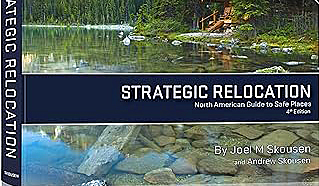
If you live in the U.S., read Joel Skousen’s book “Strategic Relocation” to learn more about your area’s vulnerabilities, to start researching your top-3 bug-out locations, and/or where you might establish a safehaven.
At the very least, we encourage you to use Skousen’s book (or a similar resource) to help you and your family pick a viable evacuation destination or safe-haven retreat location.
Most people can’t do “perfect,” so don’t let the task of researching or finding the ideal location prevent you from selecting your “best option” for evacuation and/or a safehaven retreat location. Pick a destination today, and then work to find something better.
Remember, it’s not enough to be ready to bug out “from” a populated area. We must be prepared to evacuate “to” a safe location, preferably where you have previously stockpiled supplies. Ideally, this should also be a location you have made ready for sustainable long-term living if necessary.
If you live in an urban area, work towards developing a safe-haven retreat location at least 200 miles from a central metropolitan area. If this isn’t something you can accomplish immediately, consider buying a utility trailer to store and transport your emergency supplies. If you have a trustworthy friend who lives along your evacuation route at a location well beyond the traffic choke points, see if you can store your loaded trailer in a shed at their home. Or, consider renting an enclosed storage unit for your trailer on a road adjacent to your bug-out route, but be sure to select a secure storage facility that provides unassisted access 24 hours a day, 7 days a week.
If you can do it securely, it is much better to stockpile these emergency supplies along your route rather than haul them from your home. This eliminates the risk and burden of hauling a trailer through traffic, an undertaking that limits maneuverability and mobility, increases fuel consumption, and increases the danger of theft and robbery.
The first hours of an evacuation are especially critical.
Therefore, keep things as simple as possible until you reach a safe, rural area.
If you can store a pre-loaded trailer containing emergency supplies, this will also give you a significant strategic advantage. But don’t be tempted to stay in that vicinity if it won’t remain safe. You don’t want to bug-out twice. Consider this pre-staged location for your supply trailer as a waypoint where you can briefly rest and refuel, not as a destination, unless it is suitable as a safehaven.
Ideally, your “safe-haven” retreat location needs more than a gas tank away from a major urban center. Why? Because you want both opportunistic criminals and unprepared evacuees to run out of gas long before they get to your safe-haven retreat location. However, this means it is also essential for you to always keep the fuel tank on your personal vehicles topped off and have several 5-gallon gas cans always full and ready for your bug-out. (See the article here on 36Ready that provides specifics on fuel storage and where to obtain military fuel storage containers, as they are generally safer than standard gas cans.) For an article on this topic, Click Here.
If you have adult children who are living life oblivious to the threats we face, it is very reasonable to want to include them in your planning. Your planning will become more involved and complex if this is your situation.
Our recommendation: Risk having your kids think you’re a little nuts, but mitigate this distraction by giving them photocopies of mainstream news articles that focus on the serious threats we are facing. Then, articulate these risk(s) verbally in conversation with them. Don’t expect them to connect the dots without our help. Provide them with written instructions and a paper map to keep in their vehicles, but clarify that this is confidential information. It is not to be shared with anyone.
Unfortunately, we may not have sufficient time for this strategy to work. Nevertheless, a plan for influencing them should be developed. A word of caution: Do not simply dump volumes of information on clueless loved ones who have not been pre-conditioned to accept the warning.
Other Useful Resources:
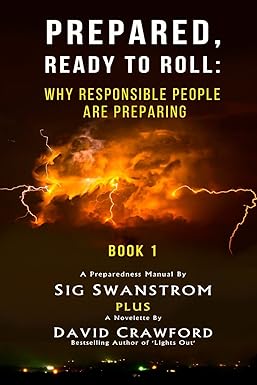
If your adult children have their heads in the sand, consider giving them copies of the book, “PREPARED: Ready to Roll — Why Responsible People Are Preparing” by SIG Swanstrom. It was written to be used as a tool for “awake” people to use to awaken family and friends who don’t recognize the dangers we are facing. If you think it might help your situation, have them read it and then discuss it with them.
If you are considering strategically relocating your residence and have adult children who will probably not move to your new location, consider picking a “fun” vacation-like locale or a place near one. Your adult children may be more inclined to visit often and bug out early if they can tell friends they are leaving for a spontaneous mini-vacation. This will let them save face if nothing happens.
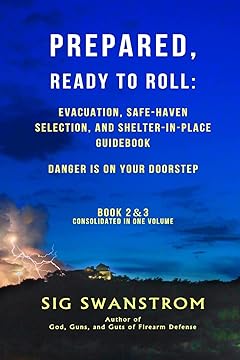
Another consideration is that people who bug out early can also help others. Once you are safely relocated, you can help those in need.
This is the mentality you might exhibit to your teenage and adult kids. From a strategy perspective, if they see an early bug-out as a way to be prepared to help others in need, they may be more willing to participate.
Regrettably, this article is filled with bad news and dire warnings. It is sobering—it should be. While we hope it stimulates proactive action, we also hope it will awaken us to new opportunities that our future will bring and encourage transformational change in how we live our lives.
Hopefully, we will reform our attitudes and priorities and overcome our materialistic worldview. With these changes, we can strive to overcome our self-centered nature and replace it with a new focus on healthy relationships and, most importantly, a revival of our personal, spiritual life. To be clear, we are not suggesting a return to an idealized version of the past. Instead, we advocate embracing a future in which we let our Creator guide our lives and stop bowing to the dysfunctional individuals who foist their leadership on us. A future that includes adopting a life of charity to all and restoring our loyalty to where it belongs.
 READINESS UNIVERSITY